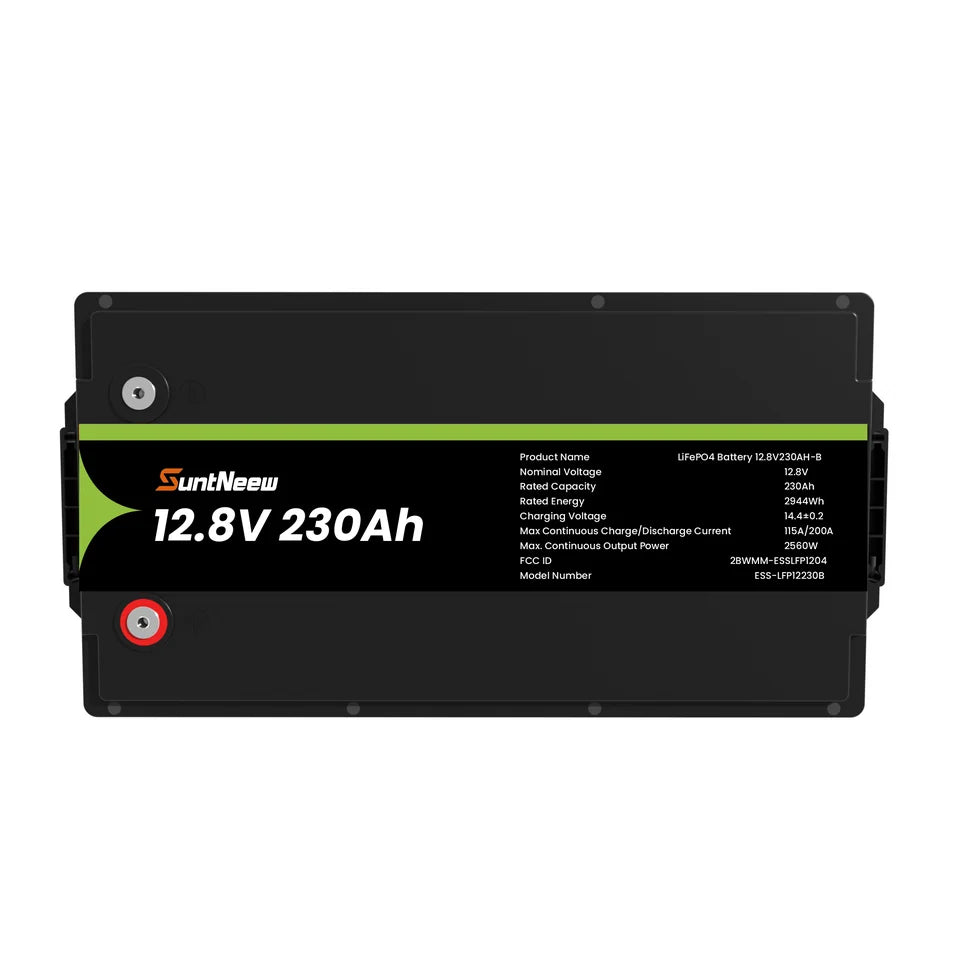
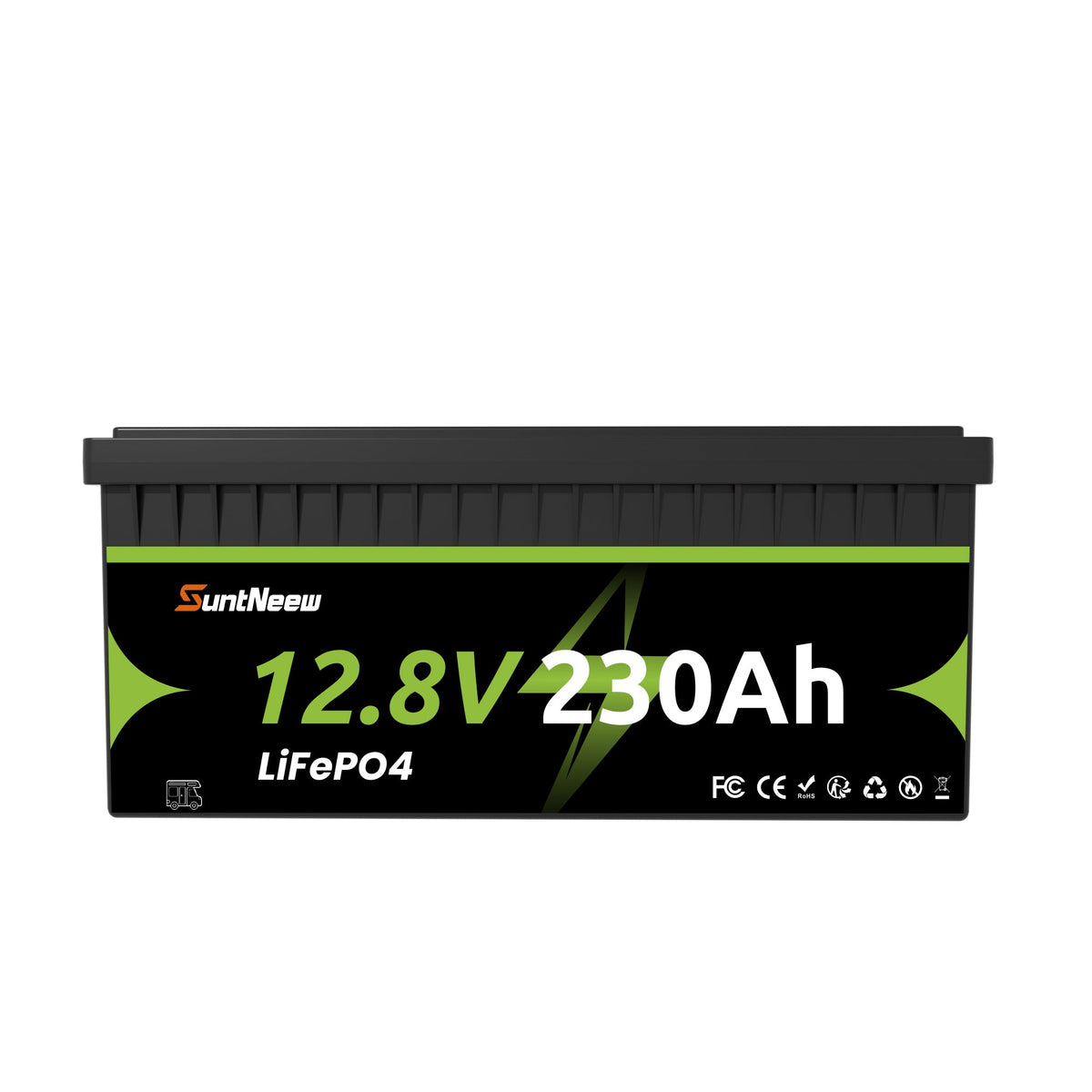
2,944Wh Rated energy
230Ah 12.8V LiFePO4
200A Max continuous discharge
5,000+ cycles Cycle-life reference
IP65 Dust-tight; protected against water jets

230AH OR 314AH?

Choose 230Ah for output. Choose 314Ah for reserve.

The enclosure size is the same. Pick by priority, then use the Power Calculator to check the appliances you run.

Higher output: 230Ah Longer reserve: 314AhUse Power Calculator

230AH FEATURES

Higher output, less weight, and enough reserve for trips that recharge often.

Choose 230Ah for the load: it delivers 2,560W continuous output, weighs 5.4kg less than 314Ah and costs less, while keeping 2,944Wh onboard in the same enclosure footprint.

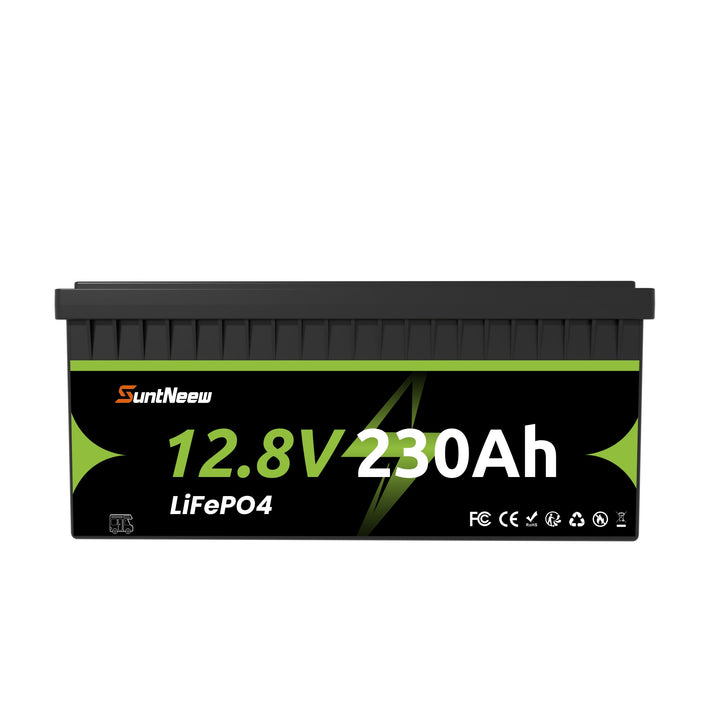
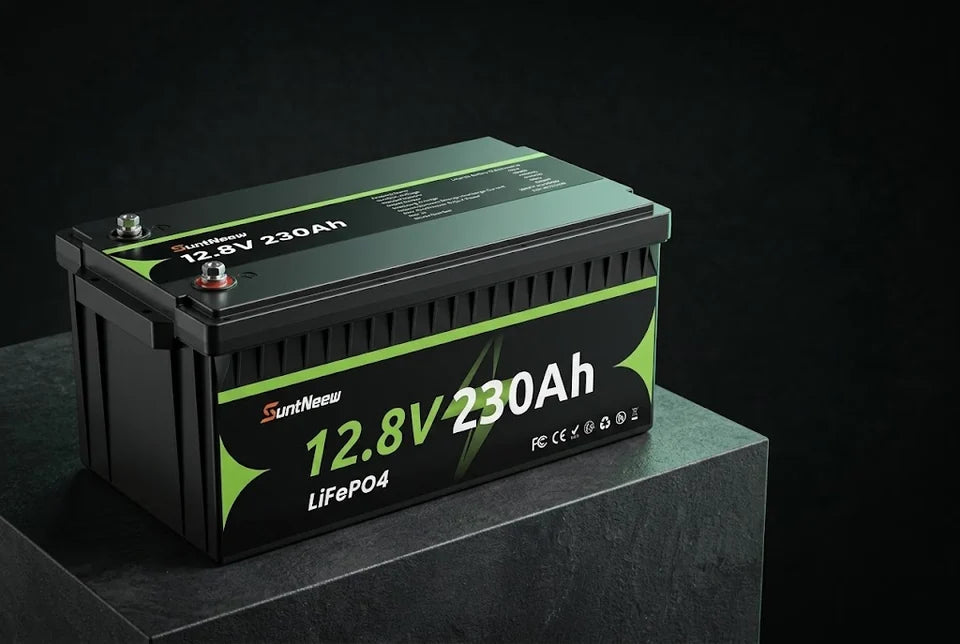
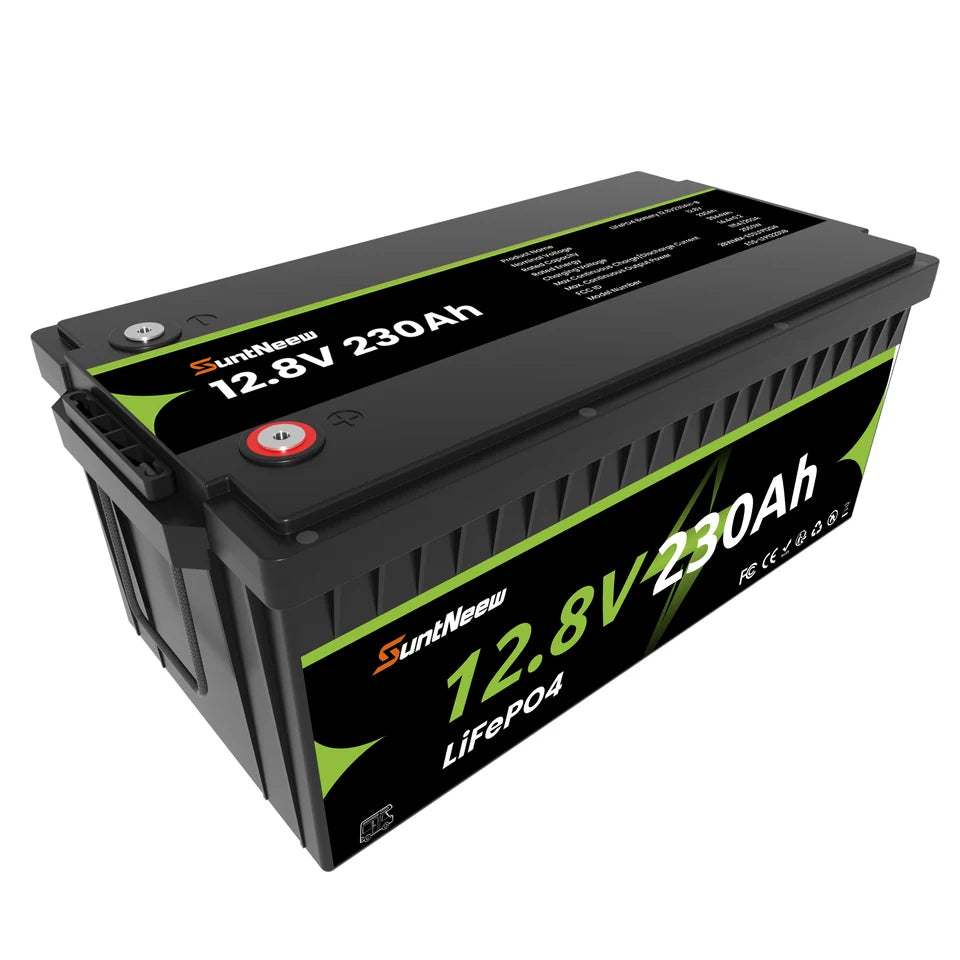
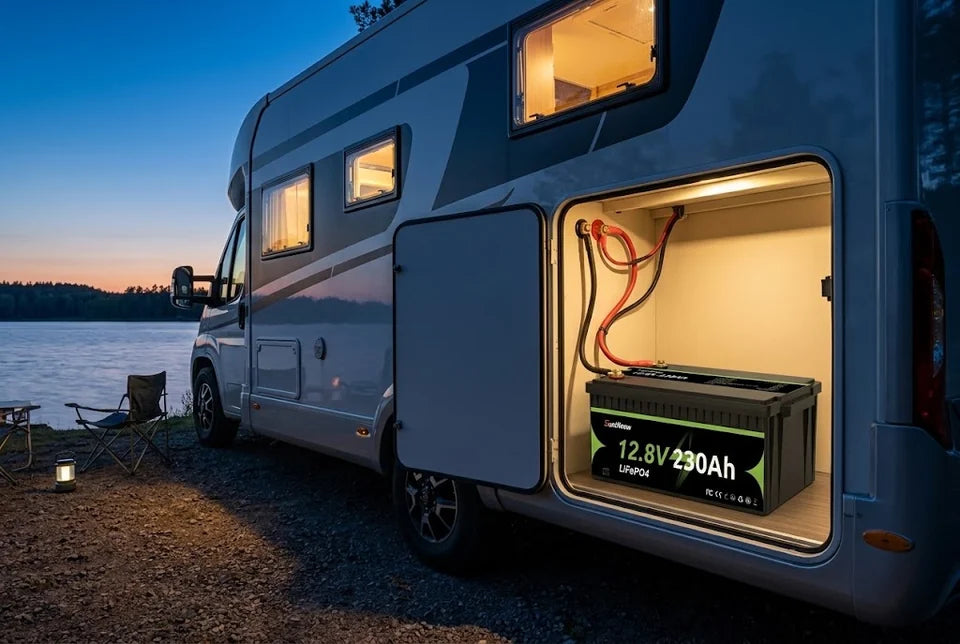
SuntNeew 12.8V 230Ah LiFePO4 RV battery premium product hero

OUTPUT WITHOUT UNUSED BULK

Choose 230Ah for the load.

Get 2,560W of continuous output from a 20.6kg battery. It is the stronger choice for higher inverter demand when your route already includes regular solar, alternator or shore-power charging.

2,560WContinuous output
200AContinuous discharge
20.6kgBattery weight
2,944WhRated energy
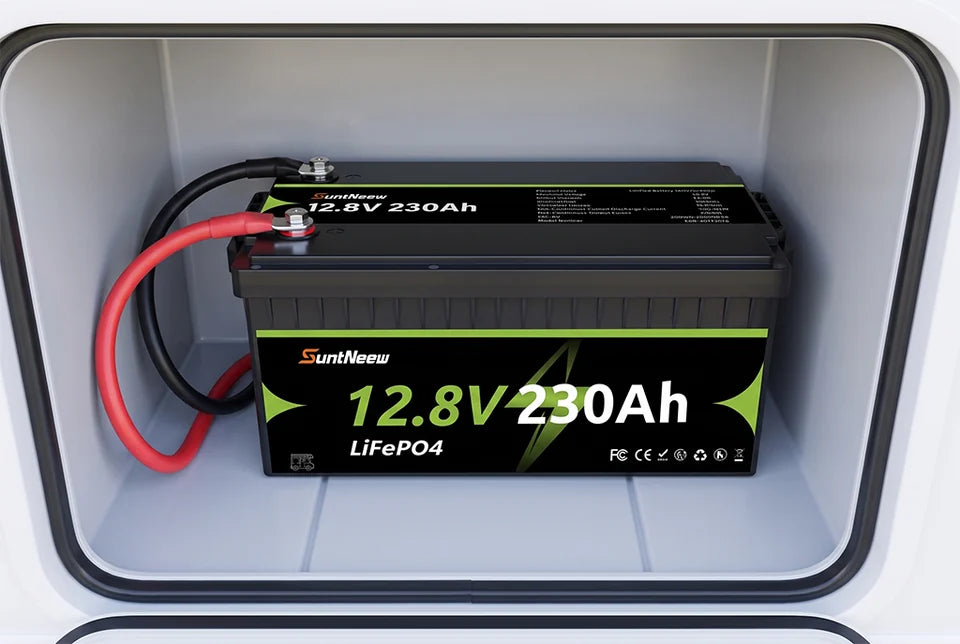
SuntNeew 230Ah LiFePO4 battery installed in a motorhome during a regularly recharged trip

TRAVEL, RECHARGE, MOVE AGAIN

Enough reserve without carrying capacity you will not use.

If you replenish from driving, solar or shore power most days, 230Ah keeps 2,944Wh onboard while saving 5.4kg versus the same-size 314Ah model.

5.4kg lessThan 314Ah
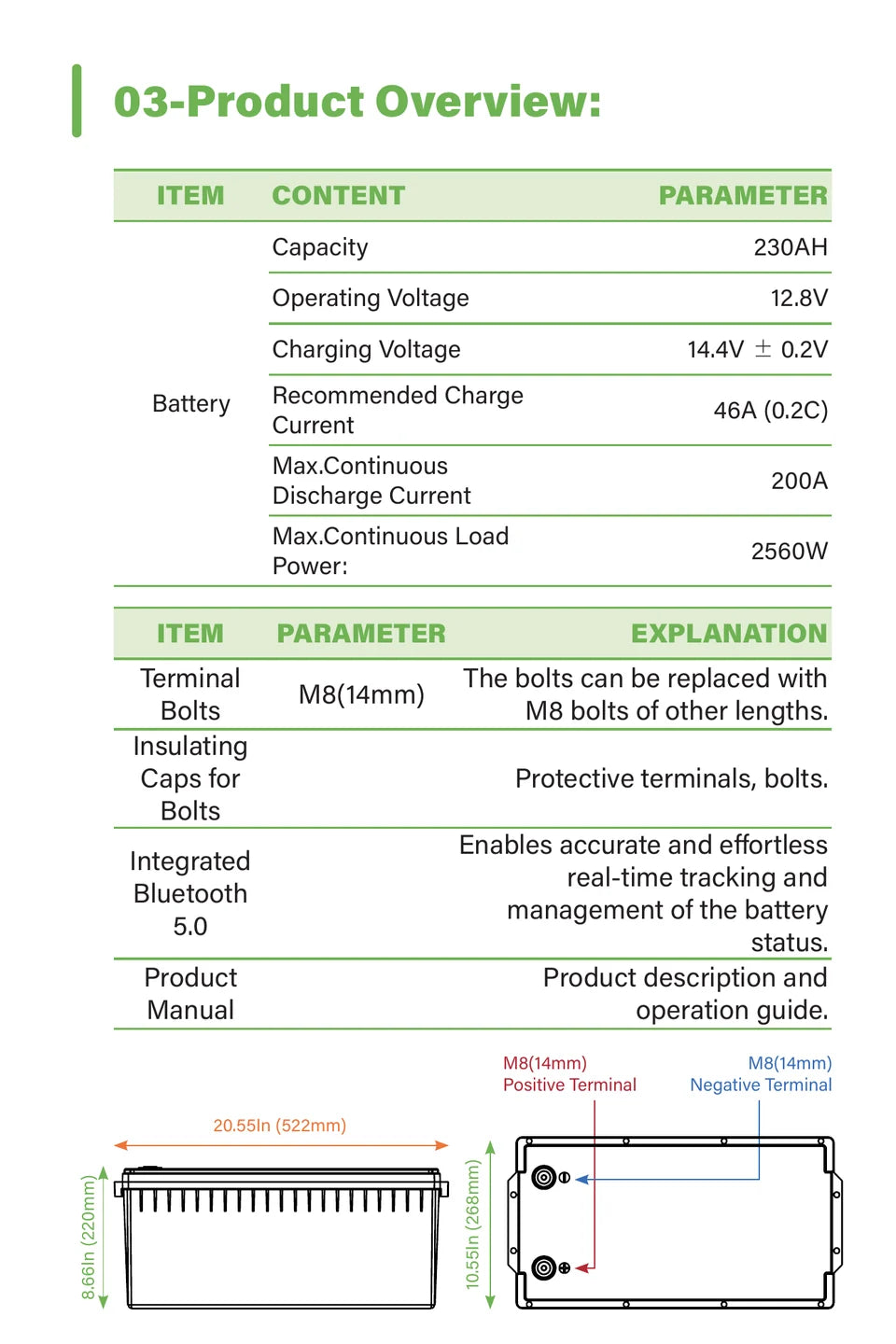
Same size522 × 268 × 220mm
2,944WhRated energy
3 routesSolar, road or shore
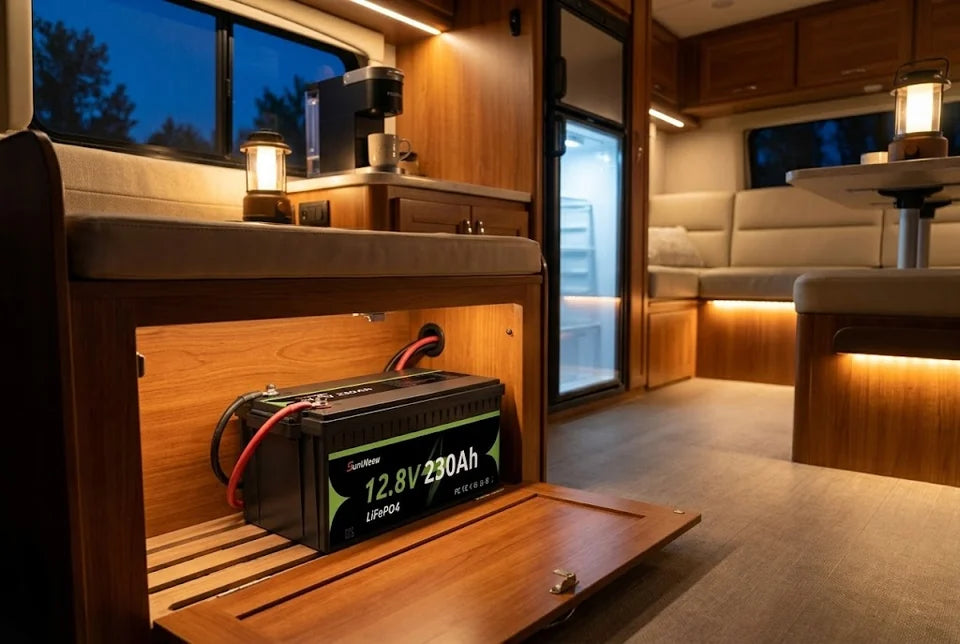
SuntNeew 230Ah LiFePO4 battery supporting higher-demand RV kitchen and comfort loads

BUILT FOR THE BUSY MOMENTS

Run the higher-load part of RV life with more headroom.

A 2,560W continuous-output ceiling gives a correctly sized inverter system more room for kitchen bursts, cooling and the background loads already running.

2,560WMax continuous output
200AMax continuous discharge
+550WVersus 314Ah
46ARecommended charge current
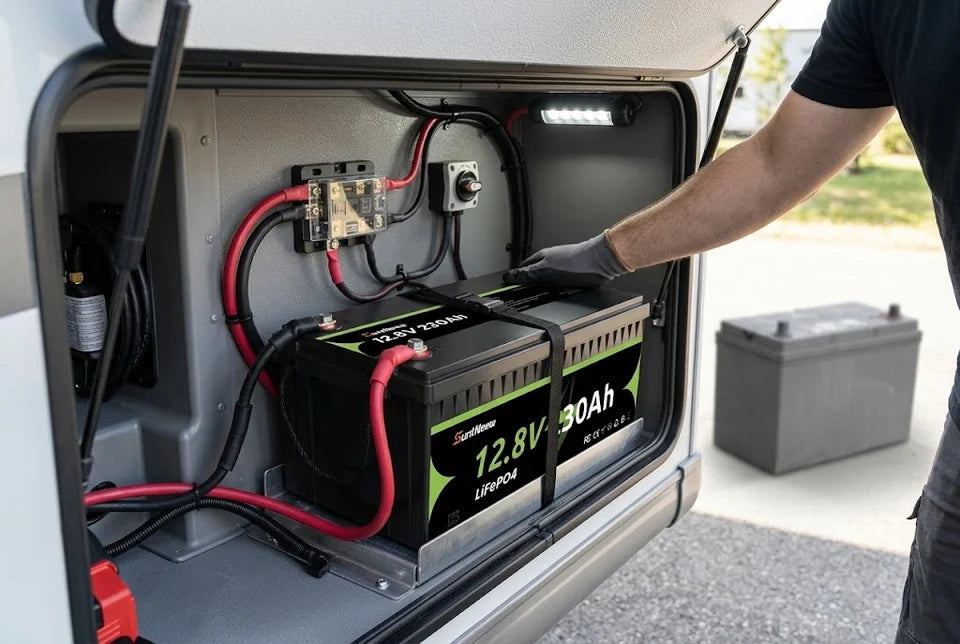
SuntNeew 230Ah LiFePO4 battery secured in a high-output RV battery bay

THE OUTPUT-FIRST 12V CHOICE

200A continuous discharge—not just a bigger Ah number.

Choose 230Ah when the electrical design needs the stronger continuous-current rating. Size the inverter, conductors, fuse, disconnect and terminals to the complete system limit.

200AMax continuous discharge
2,560WMax continuous output
M8 × 14mmTerminal format
IP65Enclosure protection
SuntNeew 230Ah LiFePO4 battery upgrade installation in an RV service compartment

LESS WEIGHT IN THE SAME BAY

Keep the 314Ah footprint. Leave 5.4kg behind.

Both large-capacity models share the stated 522 × 268 × 220mm enclosure. Choose 230Ah when structure, payload and service handling matter more than the extra reserve.

522 × 268 × 220mmEnclosure dimensions
20.6kgBattery weight
5.4kg lessThan 314Ah
ABSHousing material
SuntNeew 230Ah LiFePO4 battery powering simultaneous RV appliances

DESIGN AROUND THE REAL LOAD

Fridge, network, lights—and the appliance you switch on next.

230Ah is the practical middle ground when daily energy stays within 2,944Wh but simultaneous demand needs up to 2,560W. Use the Power Planner to test your own devices.

2,944WhRated energy
2,560WContinuous output
12VRV auxiliary loads
Your devicesCompare in planner
SuntNeew 230Ah LiFePO4 RV battery with Bluetooth status monitoring on a phone

BLUETOOTH 5.0 MONITORING

Know when to use the load—and when to recharge.

Check supported app readings for state of charge, voltage, current and battery temperature before a demanding appliance or the next travel leg.

Bluetooth 5.0Wireless connection
SOCState-of-charge view
V / AVoltage and current
TemperatureBattery condition view
SuntNeew 230Ah LiFePO4 RV battery in a protected cold-weather installation

COLD-WEATHER PROTECTION

A clearer charging plan when the temperature drops.

Low-temperature charging protection pauses charging below the documented limit and resumes when conditions recover, so winter installation planning is easier.

0°CCharging stops below
5°CCharging resumes above
-20–60°CDischarge range
IP65Enclosure protection
Four practical LiFePO4-compatible charging paths for the SuntNeew 230Ah RV battery

MADE FOR REGULAR REPLENISHMENT

Recharge as the trip moves: shore, solar, alternator or generator.

230Ah makes the most sense when charging is already part of the route. Pair it with LiFePO4-compatible CC/CV equipment and coordinate every source within the documented limits.

CC/CVCharge method
14.4V ± 0.2VCharge voltage
46ARecommended current
115AMax continuous charge
SuntNeew 230Ah LiFePO4 RV battery beside its product manual and technical documents

DOCUMENTS BEFORE INSTALLATION

The details you need are ready before you build.

Use the English manual as the installation source of truth, then review the shared FCC SDoC, CE-EMC and RV-series RoHS public copies in the Documents section.

ManualEnglish PDF
FCC230Ah / 314Ah SDoC
CE-EMC230Ah / 314Ah scope
RoHSRV-series report
Matched SuntNeew 230Ah LiFePO4 batteries arranged as an expandable RV power bank

SCALE OUTPUT AND ENERGY TOGETHER

Start with the higher-output unit, then build a matched bank.

Series and parallel layouts give larger RV builds a path to more voltage, output or reserve when identical batteries, balanced wiring, fusing and disconnects are planned as one system.

4SMaximum series layout
4PMaximum parallel layout
16Batteries in a 4P4S bank
47.1kWhRated energy at 4P4S

Verified product data

230Ah technical specifications

The key capacity, charging, protection and installation values are transcribed from the current English product manual. Use the manual for the full operating sequence and safety limits.

Capacity & performance View details
Cell chemistry
LiFePO4
Rated voltage
12.8V
Rated capacity
230Ah
Rated energy
2,944Wh
Maximum continuous output power
2,560W
Cycle-life reference
5,000+ cycles
Charging, monitoring & protection View details
Model
ESS-LFP12230B
Charge method
CC/CV
Charge voltage
14.4V +/- 0.2V
Recommended charge current
46A (0.2C)
Maximum continuous charge current
115A
Maximum continuous discharge current
200A
Wireless monitoring
Bluetooth 5.0
Enclosure protection
IP65 (not for immersion)
Low-temperature charging protection
Stops below 0C; resumes above 5C
Enclosure & physical fit View details
Dimensions (L × W × H)
522 × 268 × 220 mm
Weight
20.6kg
Housing material
ABS
Recommended terminal torque
12 to 14 N.m
Temperature range
Charge 0 to 55C; discharge -20 to 60C; storage -10 to 50C

Installation planning

Before installation

  • Verify that the mounting structure supports the 20.6kg battery
  • Size the inverter, conductors and protection within the 200A continuous limit
  • Use 46A as the recommended charge reference and keep total charging within the 115A maximum
  • Protect terminals and allow safe service access around the enclosure

Product documentation

Manuals & Documents

User Manuals

Safety & Compliance

IP65 is shown as the unified RV-line enclosure specification. The compliance cards identify the exact shared or model-matched scope; public copies are added only after redaction review.

FCC FCC SDoC — 230Ah / 314Ah listed models View public copy CE-EMC CE-EMC — 230Ah / 314Ah listed models View public copy RoHS RoHS — RV battery series View public copy UN38.3 UN38.3 Summary — 230Ah Public copy pending SDS SDS — 230Ah Public copy pending IP65 IP65 enclosure protection — RV battery family Public copy pending
View public documents

230Ah planning

Frequently asked questions

How much energy does the 230Ah battery store?

The rated energy is 2,944Wh, calculated from the documented 12.8V and 230Ah ratings. Usable energy depends on system settings, load and operating conditions.

Can I run a 200A load continuously?

200A is the documented maximum continuous-discharge rating. The inverter, conductors, fuses, terminals and temperature conditions must also support the planned load.

What charger size should I use?

The manual lists 46A as the recommended charge current and 115A as the maximum continuous charge current, using a 14.4V +/- 0.2V CC/CV profile. Coordinate all charging sources within those limits.

What does IP65 mean for this battery?

IP65 indicates a dust-tight enclosure with protection against water jets. It is not an immersion rating; keep the battery location, terminals and cable routing protected and follow the installation manual.

Should I choose the 230Ah or 314Ah battery?

Choose 230Ah when 2,944Wh covers your time between charges and you want 2,560W continuous output, 5.4kg less weight and the lower current single-unit price. Choose 314Ah when 2,010W covers the load and the priority is 1,075.2Wh more reserve in the same 522 × 268 × 220mm enclosure. Test your devices in the Power Planner.

Where can I review the complete operating limits?

The current English product manual is available in Documents on this page. Review it together with the charger, inverter and RV manufacturer instructions before installation.