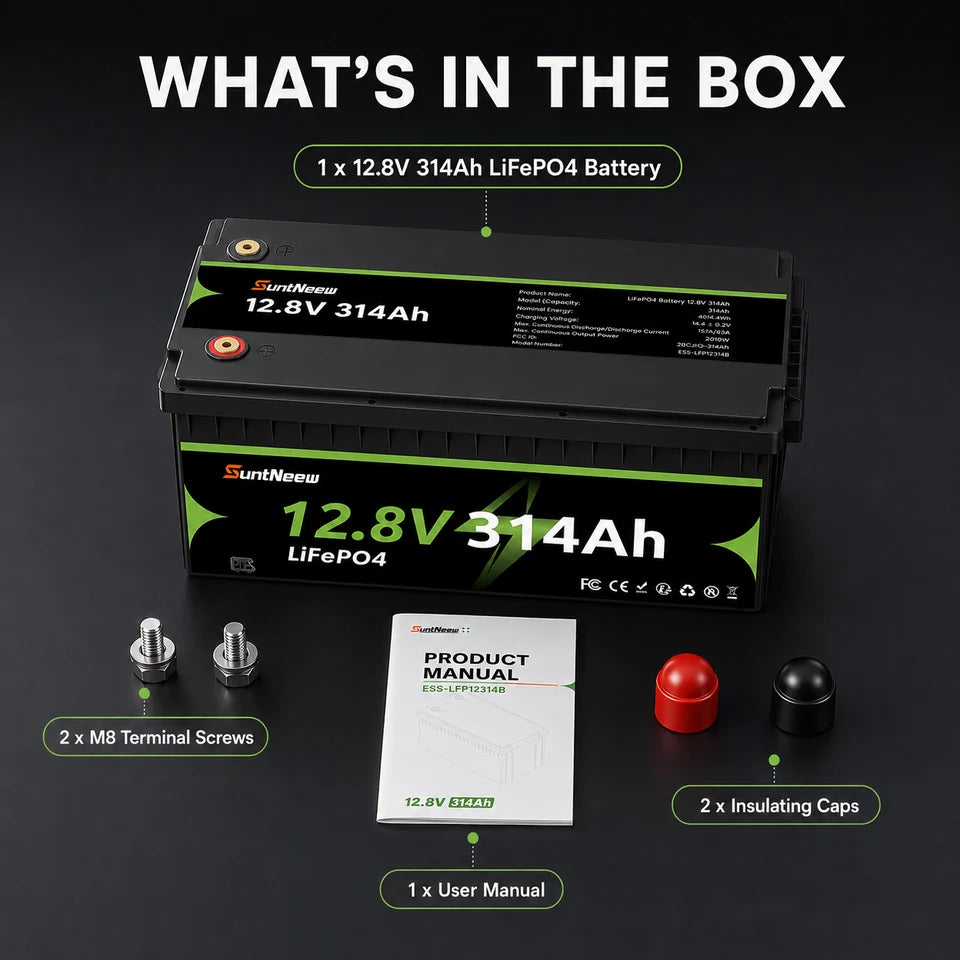
4,019.2Wh Rated energy
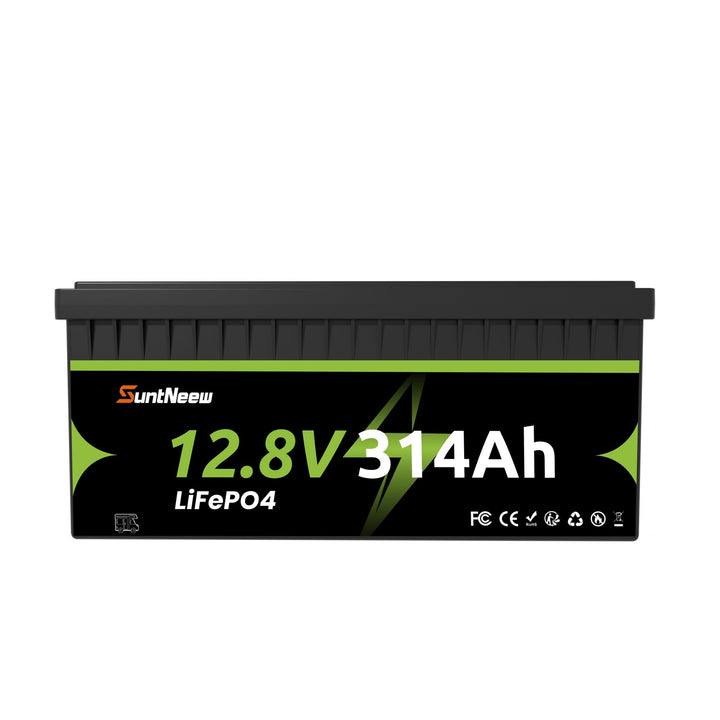
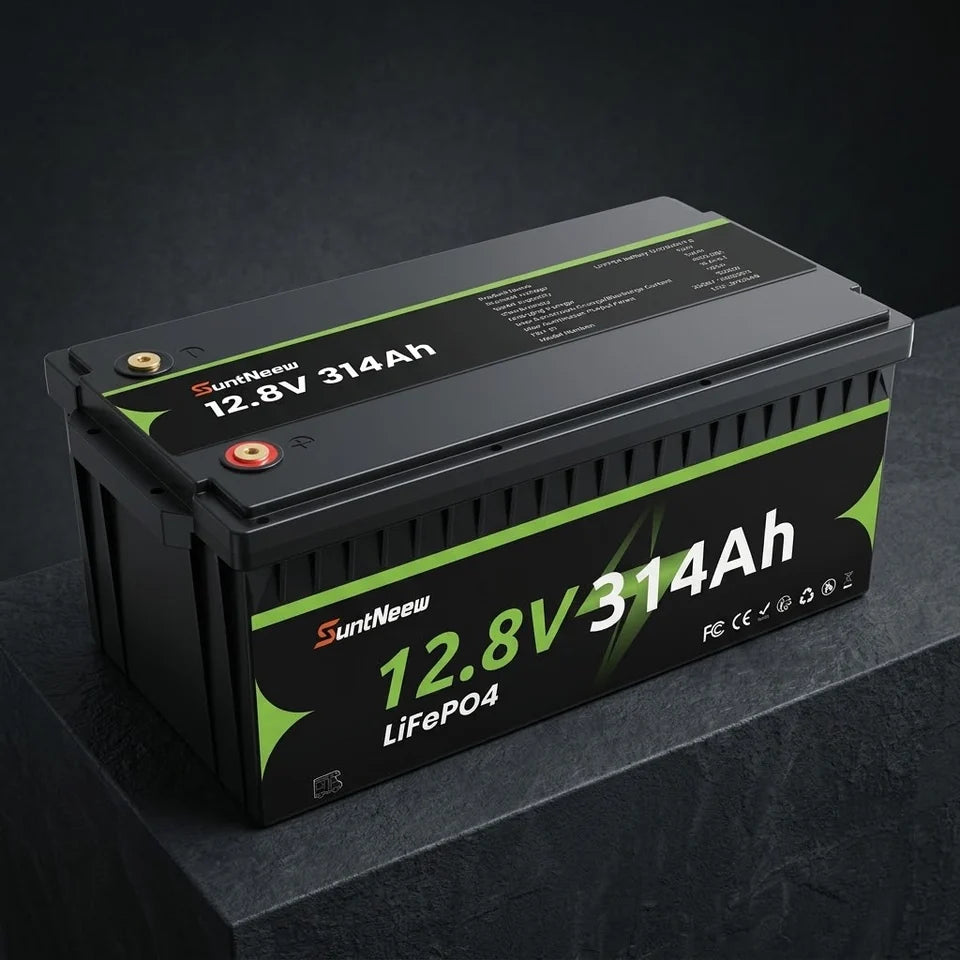
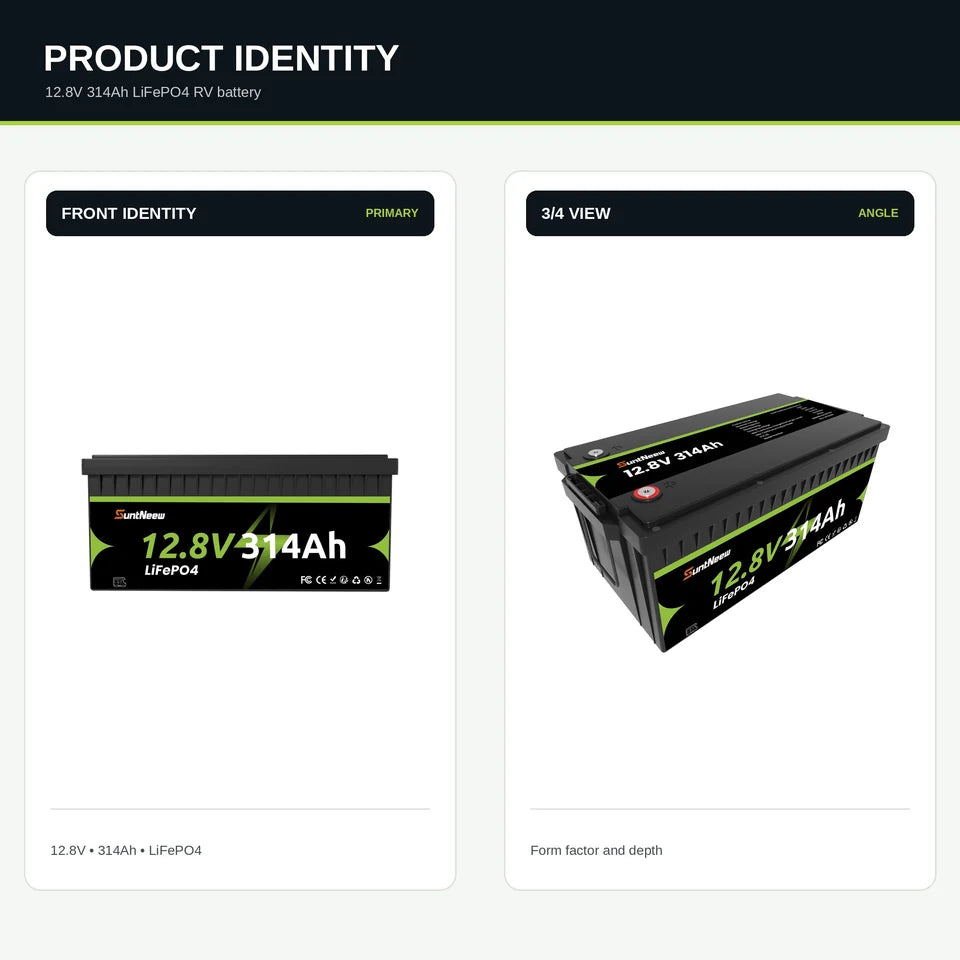
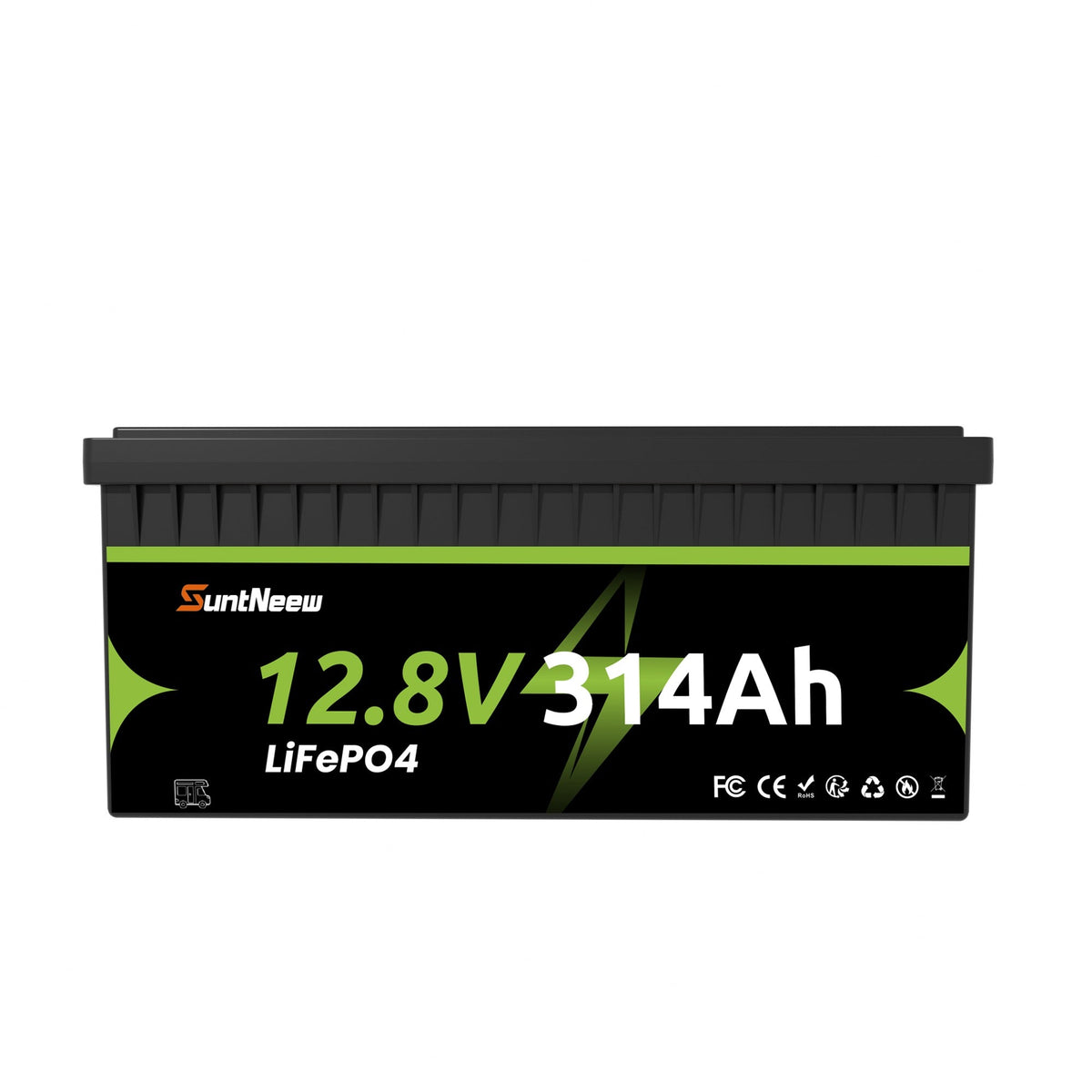
314Ah 12.8V LiFePO4
5,000+ cycles Cycle-life reference
157A Max continuous discharge
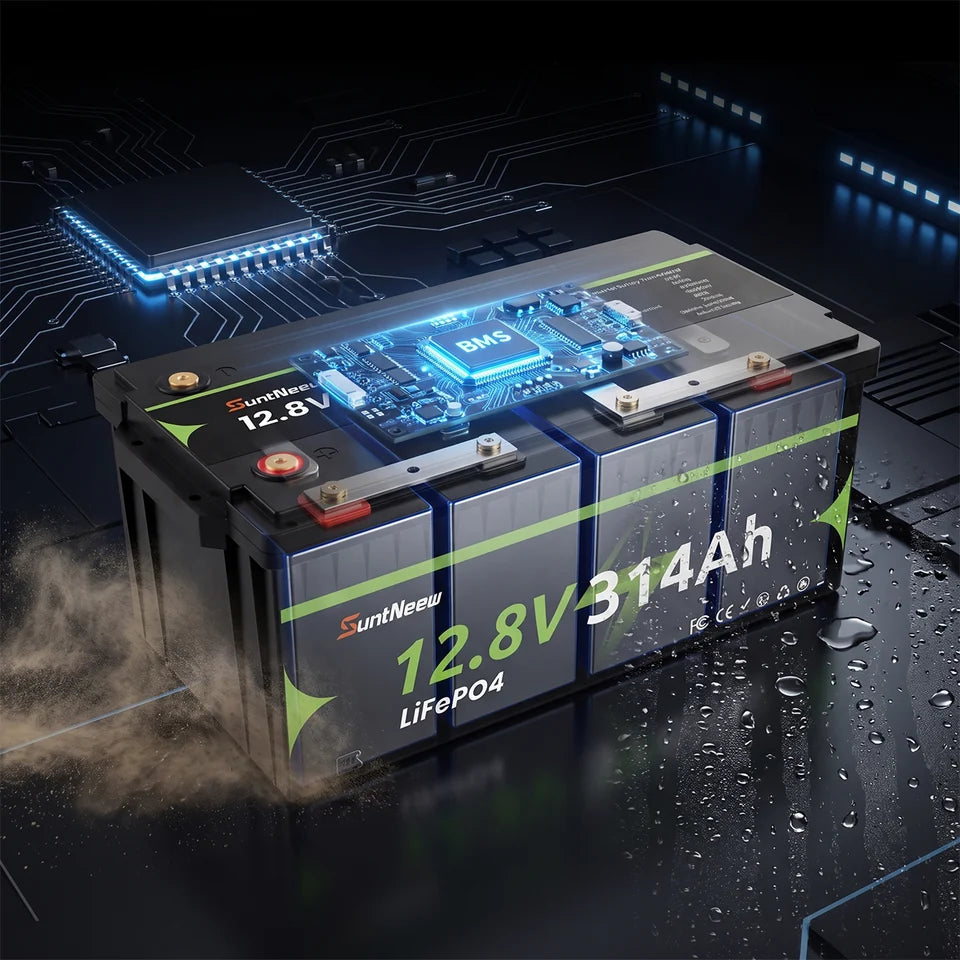
IP65 Dust-tight; protected against water jets

230AH OR 314AH?

Choose 230Ah for output. Choose 314Ah for reserve.

The enclosure size is the same. Pick by priority, then use the Power Calculator to check the appliances you run.

Higher output: 230Ah Longer reserve: 314AhUse Power Calculator

314AH FEATURES

Longer reserve for trips that cannot count on the next charge.

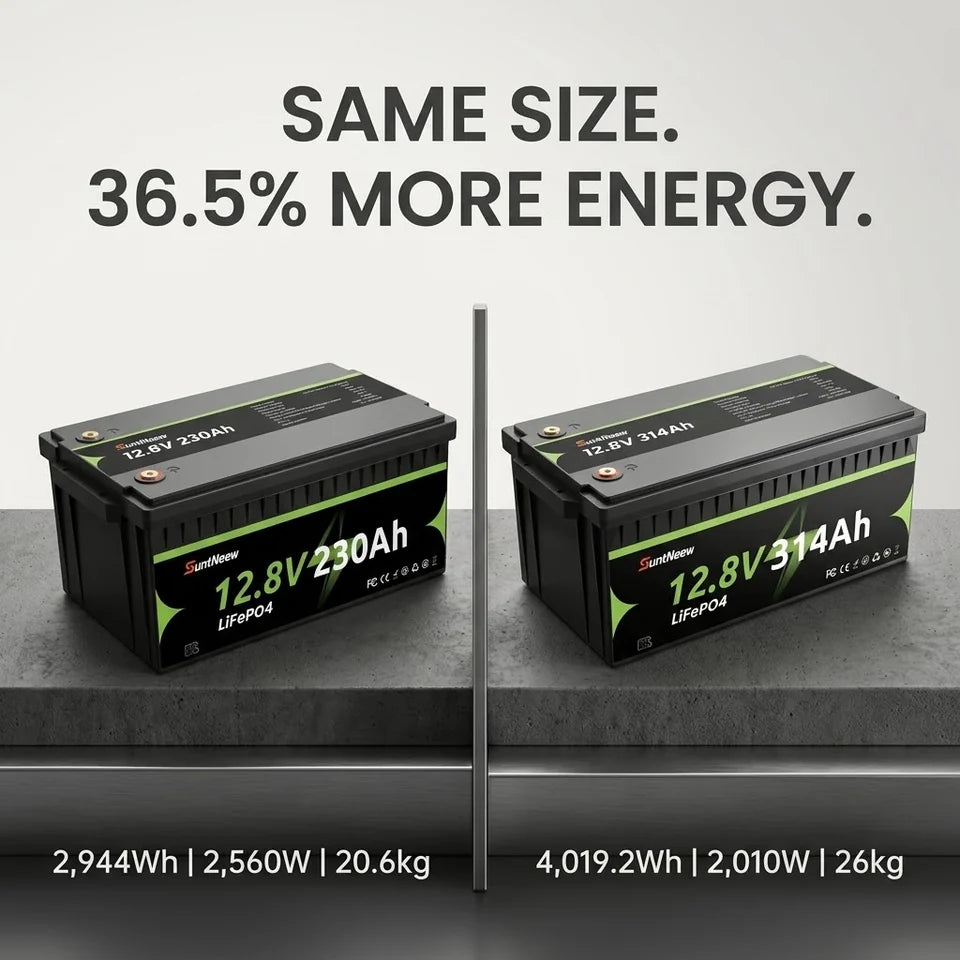
Choose 314Ah for the hours: it puts 1,075.2Wh / 36.5% more energy than 230Ah in the same enclosure, while its 2,010W continuous limit defines which loads it is built to serve.

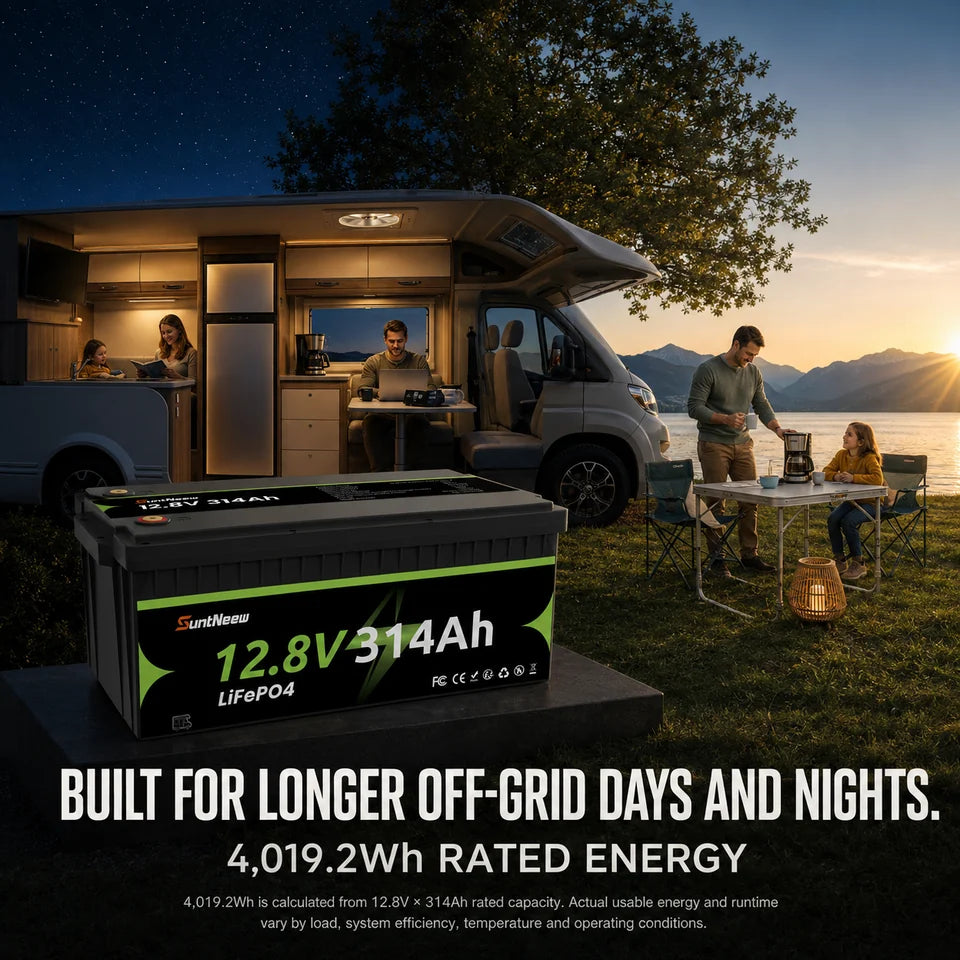
314Ah LiFePO4 battery supporting extended RV living beside a motorhome

LONGER RESERVE, SAME FOOTPRINT

Choose 314Ah for the hours.

When the next useful charge may be tomorrow rather than today, 4,019.2Wh keeps more energy behind refrigeration, work, network and overnight essentials.

4,019.2WhRated energy
+1,075.2WhVersus 230Ah
+36.5%More rated energy
26kgBattery weight
314Ah LiFePO4 battery capacity and weight comparison visual

SAME BAY. MORE TIME BETWEEN CHARGES.

Make the same enclosure carry 36.5% more energy.

230Ah and 314Ah share the stated 522 × 268 × 220mm outer dimensions. Choose 314Ah when the bay cannot grow but the reserve needs to.

Same sizeAs 230Ah
4,019.2WhRated energy
1,075.2WhAdditional reserve
36.5%More energy
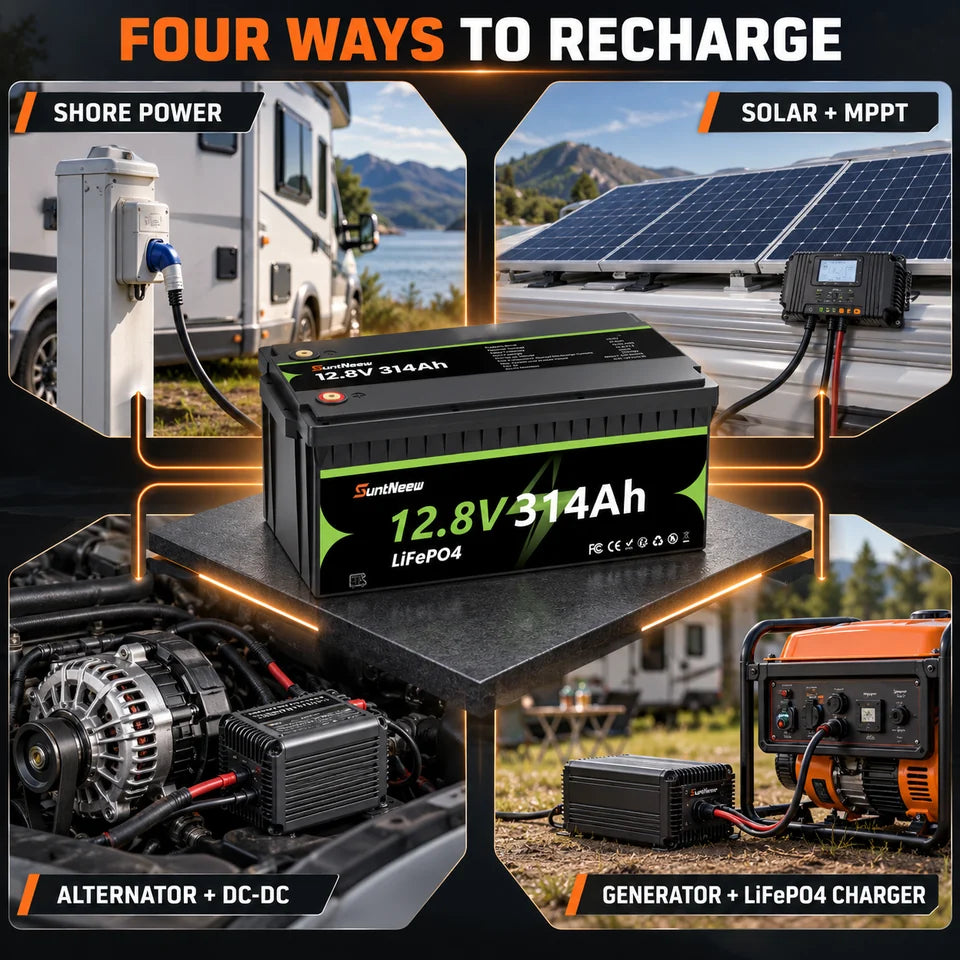
314Ah LiFePO4 battery charging and protection visual

KNOW THE TRADEOFF

More energy, with a 2,010W continuous-output ceiling.

314Ah is the reserve-first model, not the higher-output model. Choose it when 2,010W / 157A covers the simultaneous load; 200A remains a BMS protection threshold, not a continuous operating rating.

157AMax continuous discharge
2,010WMax continuous output
200ABMS protection
63ARecommended charge current
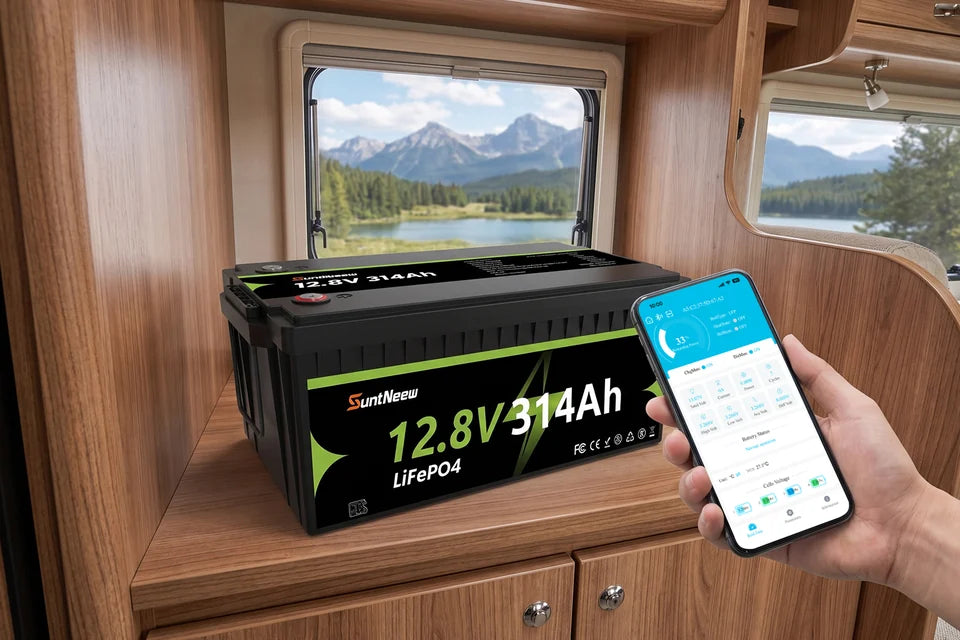
314Ah LiFePO4 battery monitored by Bluetooth app beside an RV

BLUETOOTH 5.0 MONITORING

Keep a 4kWh-class reserve easy to read.

Review state of charge, voltage, current and temperature from the supported app before you change loads or charging plans.

Bluetooth 5.0Wireless connection
SOCState-of-charge view
V / AVoltage and current
TemperatureBattery condition view
314Ah LiFePO4 battery bank expansion concept for an RV system

HIGH-RESERVE BANK PLANNING

A substantial single battery with room for a larger bank.

Series and parallel support lets a 314Ah installation grow when the enclosure, restraint, conductors and protection devices are designed together.

4SMaximum series layout
4PMaximum parallel layout
51.2VFour-battery series voltage
16Batteries in a 4P4S bank
314Ah LiFePO4 battery in a cold-weather RV setting

COLD-WEATHER PROTECTION

Protect the larger reserve when cold mornings arrive.

Low-temperature charging protection pauses charging below the documented limit and resumes after the battery returns to a suitable temperature.

0°CCharging stops below
5°CCharging resumes above
-20–60°CDischarge range
IP65Enclosure protection

Verified product data

314Ah technical specifications

The key capacity, charging, protection and installation values are transcribed from the current English product manual. Use the manual for the full operating sequence and safety limits.

Capacity & performance View details
Cell chemistry
LiFePO4
Rated voltage
12.8V
Rated capacity
314Ah
Rated energy
4,019.2Wh
Maximum continuous output power
2,010W
Cycle-life reference
5,000+ cycles
Charging, monitoring & protection View details
Model
ESS-LFP12314B
Charge method
CC/CV
Charge voltage
14.4V +/- 0.2V
Recommended charge current
63A (0.2C)
Maximum continuous charge current
157A
Maximum continuous discharge current
157A
BMS protection current
200A protection threshold; not a continuous operating rating
Wireless monitoring
Bluetooth 5.0
Enclosure protection
IP65 (not for immersion)
Low-temperature charging protection
Stops below 0C; resumes above 5C
Enclosure & physical fit View details
Dimensions (L × W × H)
522 × 268 × 220 mm
Weight
26kg
Housing material
ABS
Recommended terminal torque
12 to 14 N.m
Temperature range
Charge 0 to 55C; discharge -20 to 60C; storage -10 to 50C

Installation planning

Before installation

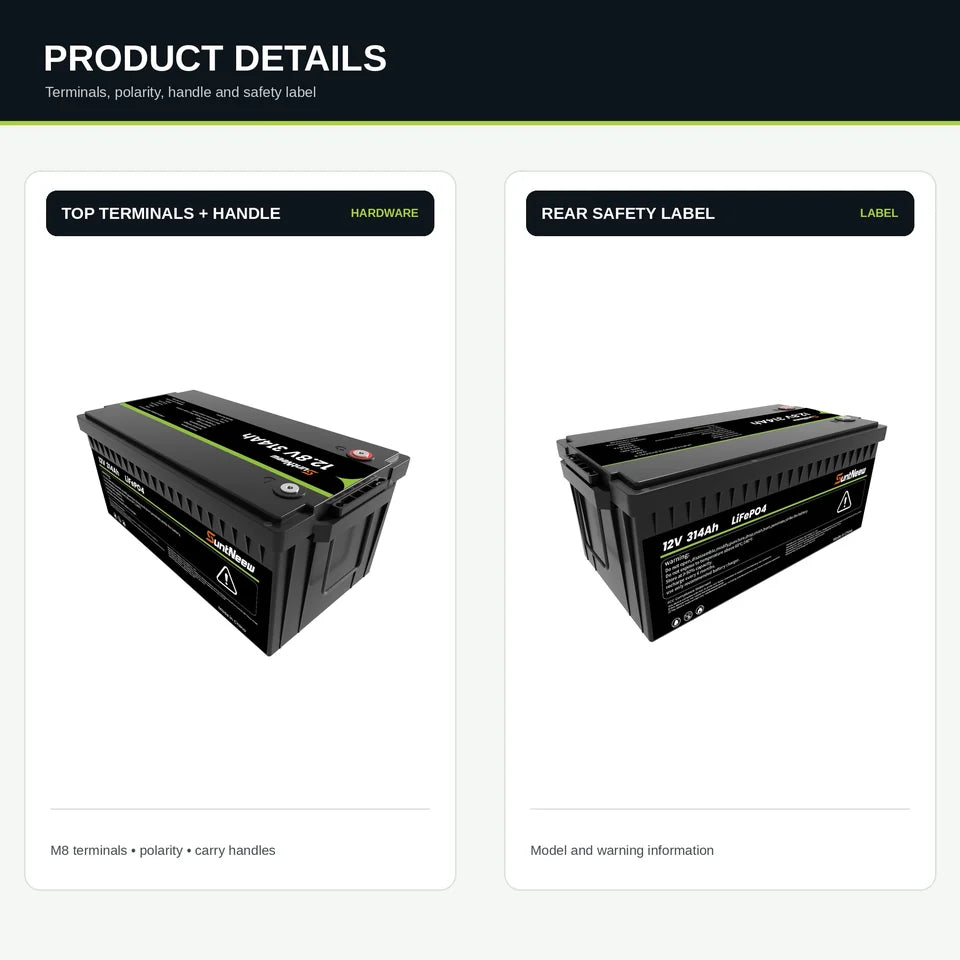
  • Verify that the mounting structure supports the 26kg battery
  • Use 63A as the recommended charge reference; keep continuous discharge within 157A and treat 200A as BMS protection only
  • Protect terminals and size conductors and fuses for the confirmed system limits
  • Keep service access, cable bend radius and restraint in the enclosure plan

Product documentation

Manuals & Documents

User Manuals

Safety & Compliance

314Ah planning

Frequently asked questions

How much energy does the 314Ah battery store?

The rated energy is 4,019.2Wh from the documented 12.8V and 314Ah ratings. Actual usable energy depends on operating limits, load and system settings.

What is the difference between 157A and 200A?

157A is the maximum continuous charge/discharge value used for normal system sizing. 200A is the BMS protection threshold, not a continuous operating rating. Use 63A as the recommended charge-current reference and size every system component to its lowest limit.

Can the 314Ah battery use the same compartment as the 230Ah model?

The stated 522 × 268 × 220 mm enclosure dimensions are the same, but the 314Ah battery weighs 26kg. Recheck structure, restraint, access and the complete electrical design for the exact model.

What does IP65 mean for this battery?

IP65 indicates a dust-tight enclosure with protection against water jets. It is not an immersion rating; keep the battery location, terminals and cable routing protected and follow the installation manual.

Should I choose the 314Ah or 230Ah battery?

Choose 314Ah when 2,010W covers your simultaneous load and you want 1,075.2Wh / 36.5% more reserve in the same 522 × 268 × 220mm enclosure. Choose 230Ah when 2,944Wh covers your time between charges and you want 2,560W continuous output, 5.4kg less weight and the lower current single-unit price. Test your devices in the Power Planner.

Where can I review the complete operating limits?

The current English product manual is available in Documents on this page. Review it together with the charger, inverter and RV manufacturer instructions before installation.