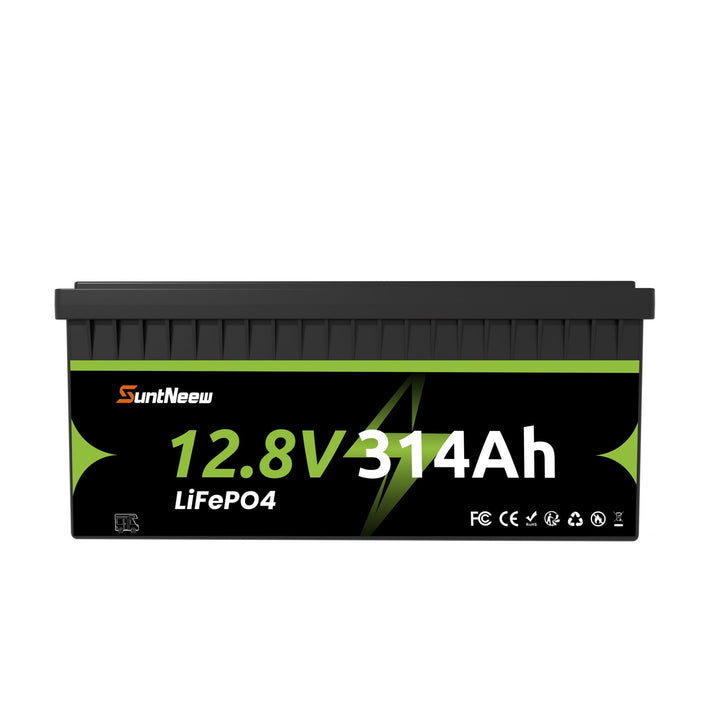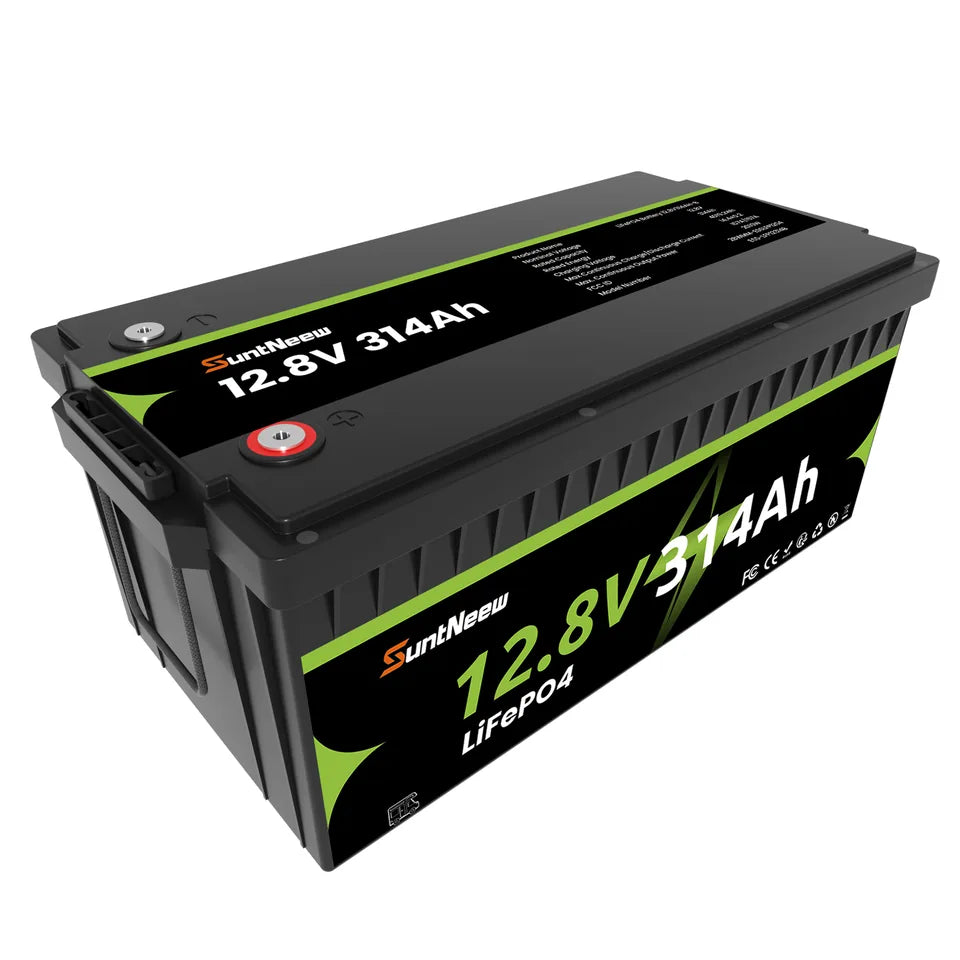
Longer reserve for trips that cannot count on the next charge.
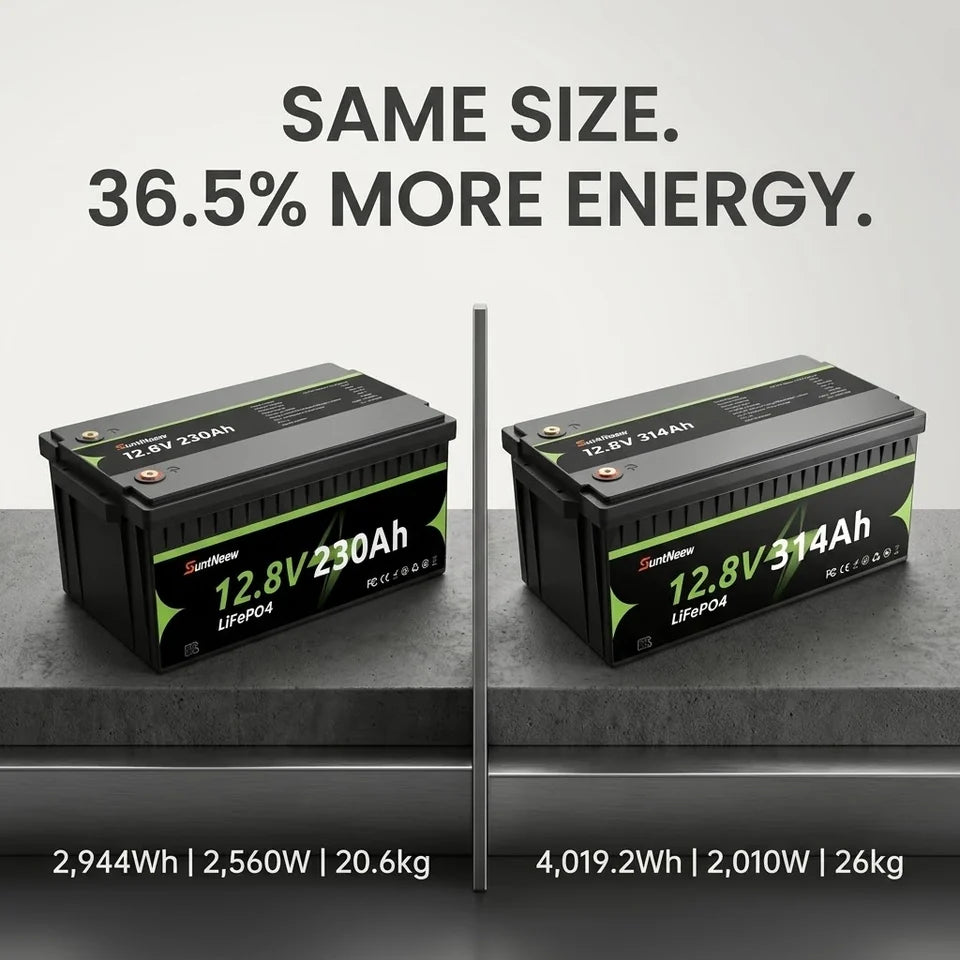
Choose 314Ah for the hours: it puts 1,075.2Wh / 36.5% more energy than 230Ah in the same enclosure, while its 2,010W continuous limit defines which loads it is built to serve.
KEEP MORE RESERVE WHEN SUNLIGHT IS LIMITED
Longer reserve buys time between uncertain charging windows.
When cloud cover reduces solar harvest and the next useful charge may be later, 4,019.2Wh keeps more reserve behind refrigeration, networking and overnight essentials. Pair the battery with a LiFePO4-compatible charger and correctly sized MPPT system.
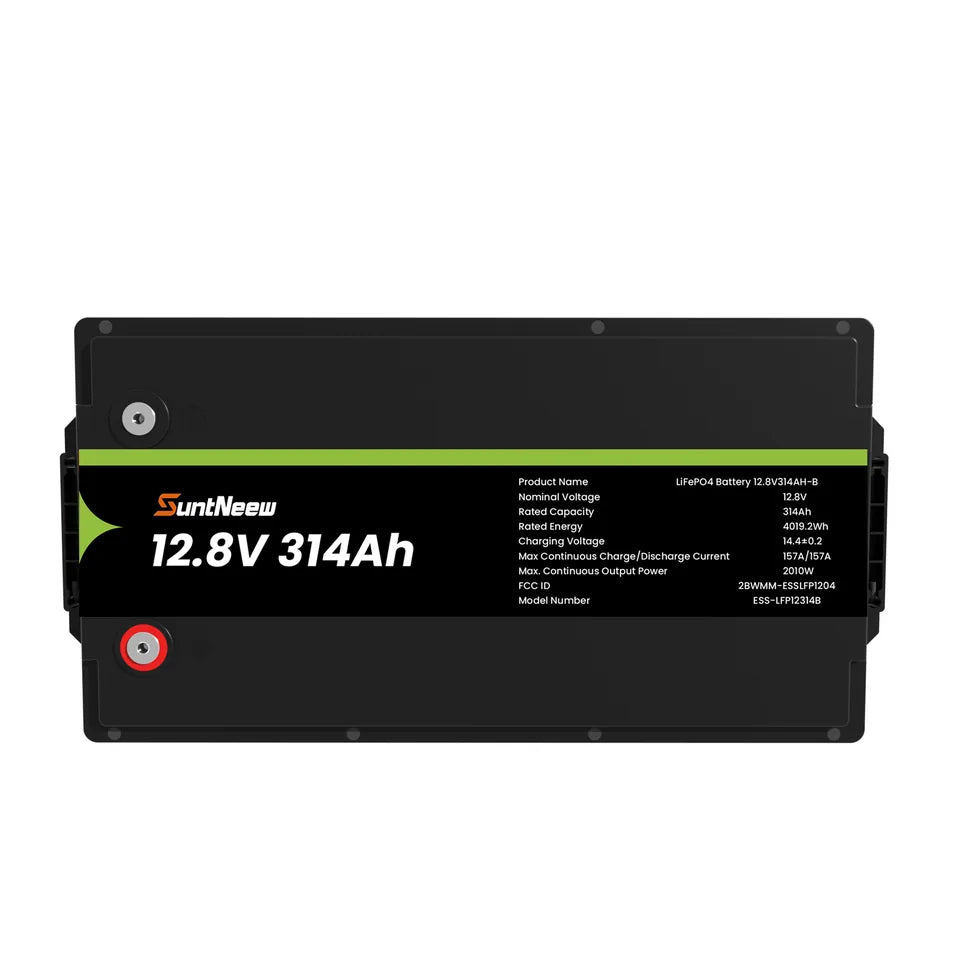
4,019.2WhRated energy
+36.5%Versus 230Ah
63ARecommended charge
157AMax continuous discharge
NIGHT TO NEXT MORNING
A larger 12V reserve for the hours after camp goes quiet.
Keep the fridge, lights, network and planned overnight loads running longer in the same 522 × 268 × 222mm enclosure used by the 230Ah model. Check your real load profile before sizing the inverter and wiring.
4,019.2WhRated energy
12.8VSystem voltage
522 × 268 × 222mmSame stated footprint
26kgBattery weight
WORK OFF GRID
A 4kWh-class reserve for remote work on the road.
Support a laptop, monitor, network gear and other planned 12V loads while you work from an RV. The 314Ah model prioritizes reserve; keep simultaneous demand within its 2,010W / 157A continuous limit.
4,019.2WhRated energy
2,010WMax continuous output
157AMax continuous discharge
Bluetooth 5.0Monitoring
CHECK STATUS BEFORE YOU CHANGE THE LOAD
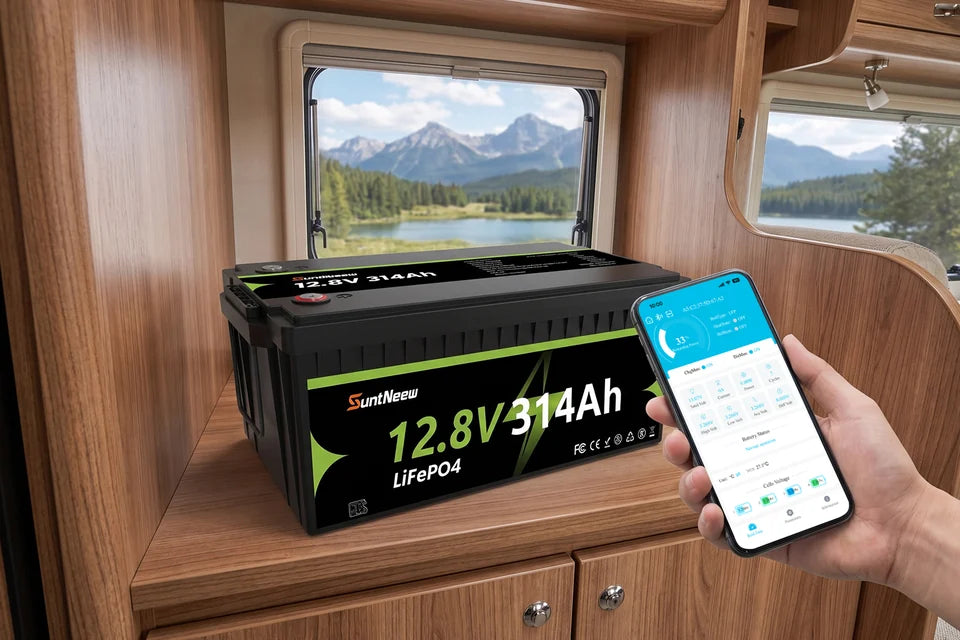
Bluetooth 5.0 keeps the 314Ah reserve easy to read.
Review state of charge, voltage, current and temperature in the supported app before you adjust loads or charging sources. Use the battery manual and app instructions for available functions.
Bluetooth 5.0Wireless monitoring
SOCState of charge
V / AVoltage and current
TemperatureBattery condition
DOCUMENTED SUPPORT
Know what is included before installation and the first trip.
Use the current English manual for operating limits, charging sequence and safety steps. Keep model-matched compliance documents with your installation records, and confirm service terms for the 314Ah model before purchase.
ManualOperating guidance
CertificatesCompliance records
Service termsModel-specific review
SupportBefore and after purchase
SECURE A 26KG BATTERY
Plan the tray, restraint and cable path before the battery arrives.
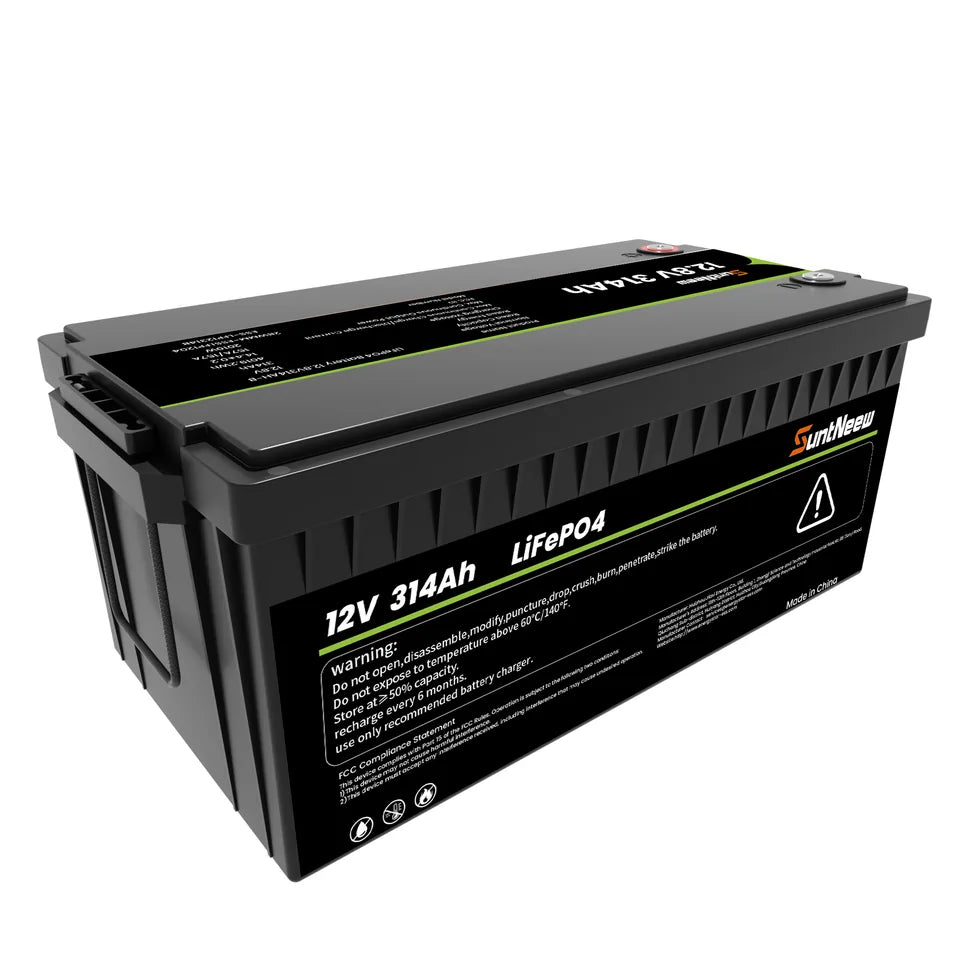
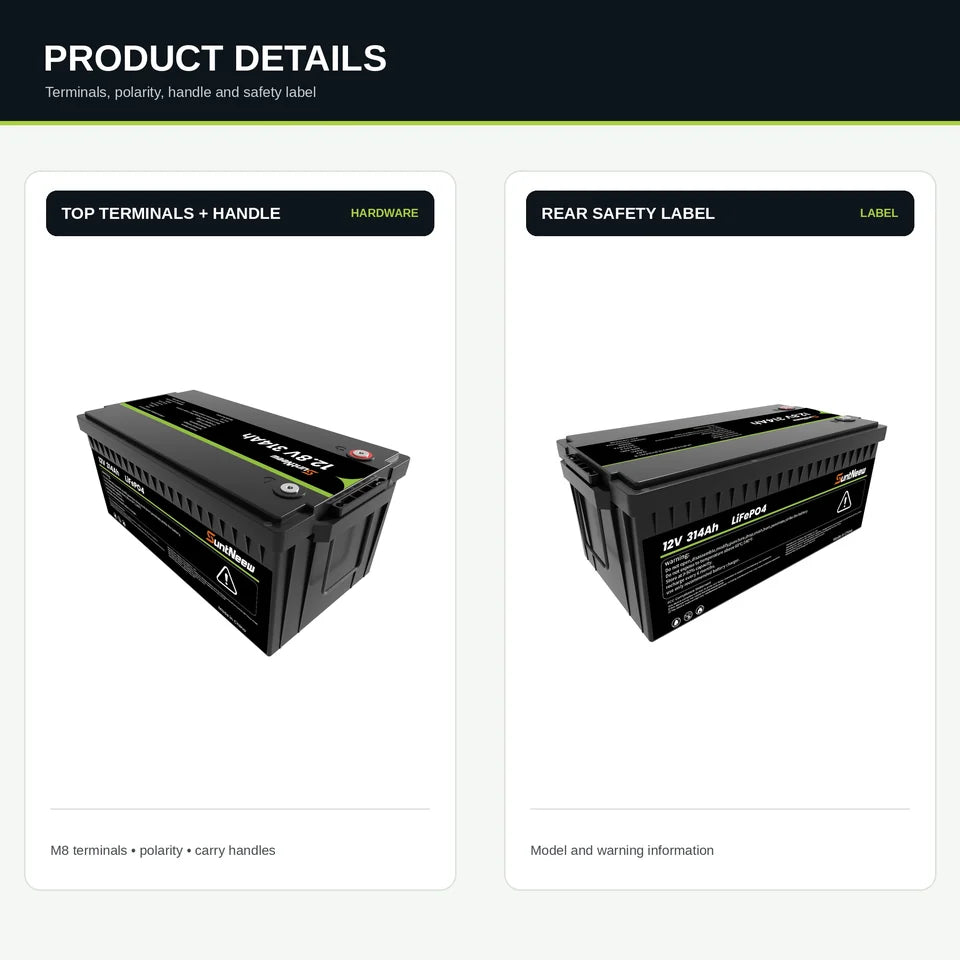
The 522 × 268 × 222mm enclosure fits the same stated footprint as 230Ah, but the 314Ah battery weighs 26kg. Confirm support structure, hold-downs, terminal access, conductor sizing and fuse placement for the complete system.
26kgBattery weight
522 × 268 × 222mmStated dimensions
12–14N·mTerminal torque
ABSHousing material
SCALE A MATCHED BANK
Build up to 4S4P when the system design calls for it.
Use matched 314Ah batteries with the same model, state of charge and installation plan. The documented 4S4P layout reaches 16 batteries and 64.3kWh rated energy; design conductors, over-current protection and restraint together.
4SSeries layout
4PParallel layout
16Matched batteries
64.3kWhRated energy at 4S4P
Verified product data
314Ah technical specifications
The key capacity, charging, protection and installation values are transcribed from the current English product manual. Use the manual for the full operating sequence and safety limits.
Capacity & performanceView details
Cell chemistry
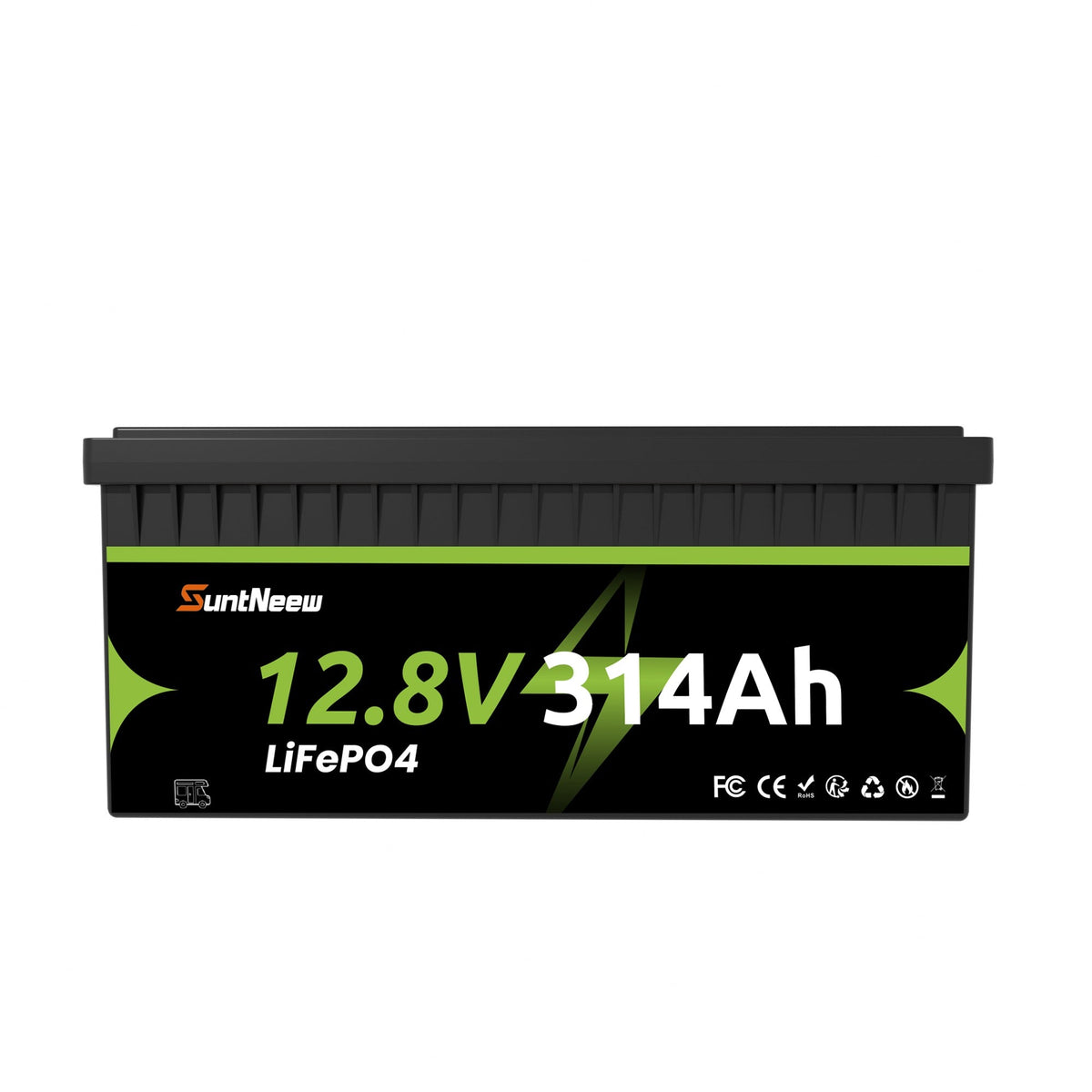
LiFePO4
Rated voltage
12.8V
Rated capacity
314Ah
Rated energy
4,019.2Wh
Maximum continuous output power
2,010W
Cycle-life reference at 70% SOH
At least 8,000 cycles
Charging, monitoring & protectionView details
Model
ESS-LFP12314B
Charge method
CC/CV
Charge voltage
14.4V +/- 0.2V
Recommended charge current
63A (0.2C)
Maximum continuous charge current
157A
Maximum continuous discharge current
157A
BMS protection current
200A protection threshold; not a continuous operating rating
Wireless monitoring
Bluetooth 5.0
Low-temperature charging protection
Stops below 0C; resumes above 5C
Enclosure & physical fitView details
Dimensions (L × W × H)
522 × 268 × 222 mm
Weight
26kg
Housing material
ABS
Recommended terminal torque
12 to 14 N.m
Temperature range
Charge 0 to 55C; discharge -20 to 60C; storage -10 to 50C
Installation planning
Before installation
Verify that the mounting structure supports the 26kg battery
Use 63A as the recommended charge reference; keep continuous discharge within 157A and treat 200A as BMS protection only
Protect terminals and size conductors and fuses for the confirmed system limits
Keep service access, cable bend radius and restraint in the enclosure plan
Product documentation
Manuals & Documents
314AH RV BATTERY
Product support for your 314Ah RV battery.
Product support, documents and installation checks for your 12.8V 314Ah RV battery.
The rated energy is 4,019.2Wh from the documented 12.8V and 314Ah ratings. Actual usable energy depends on operating limits, load and system settings.
What is the difference between 157A and 200A?
157A is the maximum continuous charge/discharge value used for normal system sizing. 200A is the BMS protection threshold, not a continuous operating rating. Use 63A as the recommended charge-current reference and size every system component to its lowest limit.
Can the 314Ah battery use the same compartment as the 230Ah model?
The stated 522 × 268 × 222 mm enclosure dimensions are the same, but the 314Ah battery weighs 26kg. Recheck structure, restraint, access and the complete electrical design for the exact model.
Should I choose the 314Ah or 230Ah battery?
Choose 314Ah when 2,010W covers your simultaneous load and you want 1,075.2Wh / 36.5% more reserve in the same 522 × 268 × 222mm enclosure. Choose 230Ah when 2,944Wh covers your time between charges and you want 2,560W continuous output, 5.4kg less weight and the lower current single-unit price. Test your devices in the Power Planner.
Where can I review the complete operating limits?
The current English product manual is available in Documents on this page. Review it together with the charger, inverter and RV manufacturer instructions before installation.
What conditions apply to the 8,000-cycle reference?
The 314Ah cycle-life reference is at least 8,000 cycles at 70% state of health (SOH), from the approved test condition of 0.5C charge and discharge to the 70% SOH end-of-test point. Actual cycle life varies with depth of discharge, charge and discharge rate, temperature and operating conditions.